Medically reviewed by Dr. Laura Roider & Dr. Nick Slenkovich


Select a section to jump to
Why Patients Consider a Breast Lift (Mastopexy)
Our goal when performing a breast lift at Colorado Plastic Surgery Center is to restore a younger, more appealing breast contour. Common reasons patients consider a mastopexy include:
- Sagging or drooping breasts after pregnancy or breastfeeding
- Loss of breast shape and projection after weight loss or weight change
- Breasts that feel deflated, flat, or wider than they used to be
- Nipples that sit lower than the breast fold
- Stretched skin
- Stretched, enlarged, or asymmetric areolas
- Breasts that rest low on the chest or hang over the breast crease



How the Breast Lift Procedure Works
In medical terminology, breast sagging is classified as ptosis. It refers to the position of the breast and nipple relative to the breast fold. The degree of ptosis (mild, moderate, or severe) is one of the factors we use to decide which lift technique is most appropriate for a given patient.
The right incision pattern depends on the degree of ptosis, the amount of skin we need to remove, and how much shape change is needed. Through the incisions, we remove the excess stretched skin, reshape the underlying breast tissue, reposition the nipple and areola higher on the chest, and reduce the areola size if appropriate. The three patterns we use most often are:
Vertical (lollipop) lift
An incision around the areola and vertically down to the breast fold. Used for mild ptosis or pseudoptosis. The vertical technique has limitations: it does not let the surgeon adjust the inframammary fold (the breast crease) or narrow the breast significantly. We discuss these trade-offs at the consultation.
Donut (peri-areolar) lift
A single circular incision around the areola. Used for very mild ptosis, small repositioning, or asymmetries between the two sides. The least visible scar pattern is limited to smaller corrections.
Anchor (Wise-pattern) lift
An incision around the areola, vertically down the center of the breast, and along the fold under the breast. The most powerful breast lift technique and our standard for moderate-to-severe ptosis or when significant skin needs to be removed. The anchor incision gives Dr. Slenkovich or Dr. Roider the most control over the final outcome, due to the ability to shape the breast in multiple dimensions: vertical projection, lateral width, and the position of the inframammary fold.



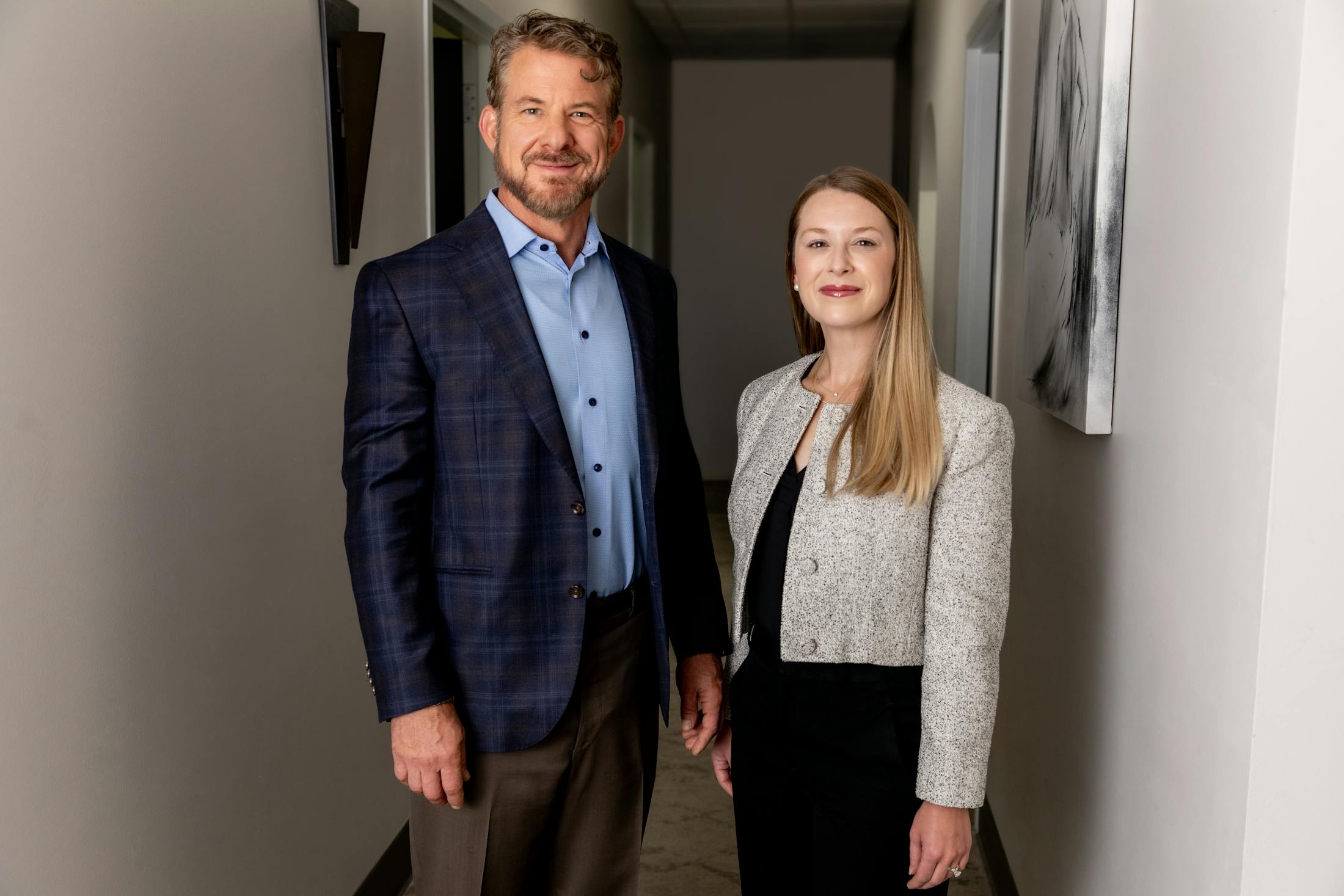
Meet Your Colorado Breast Lift Surgeons
At Colorado Plastic Surgery Center, Dr. Slenkovich and Dr. Roider combine their extensive training with a proven, evidence-based approach to guide you smoothly through your breast lift procedure.
Dr. Nick Slenkovich, MD
Dr. Slenkovich is a board-certified plastic surgeon with over 20 years of experience and multiple published medical articles on breast procedures. His patients describe his consultation style as unhurried and deeply collaborative. He believes in a patient-centered partnership, empowering you to play an active role in decision-making on the journey to becoming your personal best.
Dr. Laura Roider, MD
Dr. Roider is a board-eligible plastic surgeon specializing in restoring breast shape and proportion after pregnancy, breastfeeding, or weight loss. Patients trust her thorough, compassionate consultations, which feature detailed discussions on how technique choices affect your final shape, nipple position, areola symmetry, and long-term durability. Dedicated to your success, Dr. Roider is committed to educating, supporting, and empowering you every step of the way.
Breast Lift FAQs
Am I a candidate for a breast lift?
Candidates for a breast lift are usually patients who have lost breast projection and shape after pregnancy, breastfeeding, weight change, or time. Often, these patients describe their breasts as flat, droopy, saggy, or deflated, and typically, the nipple position has dropped below the breast fold. Stable weight, general good health, and a clear sense of what you are hoping to change are all helpful.
What is the difference between a breast lift and a breast reduction?
A breast lift reshapes the breast and repositions the nipple with minimal change to breast size. The breast often appears slightly smaller after a lift because tissue is repositioned and lifted, but reducing volume is not the goal. A breast reduction does the heavy lifting on size: it primarily reduces breast volume and reshapes the breast at the same time. The two procedures use similar incision patterns. Which one is right for you depends on whether you want a smaller breast or simply a different shape and a higher nipple position. The breast lift before-and-after gallery and the breast reduction before-and-after gallery make the visual difference clear.
Should I get a breast lift, an augmentation, or both?
A breast lift addresses sagging and nipple position; a breast augmentation addresses volume. Patients whose primary concern is shape and nipple position usually choose a lift alone. Patients who want more upper-pole volume in addition to a lift often choose a combined lift with augmentation. For patients who arrive undecided, we use Vectra 3D imaging during the consultation to preview both options side by side, which often makes the right choice clearer. Three galleries help patients see the differences: the breast lift gallery, the breast augmentation gallery, and the combined breast augmentation and lift gallery.
Where is a breast lift performed and how long does it take?
A breast lift at Colorado Plastic Surgery Center is performed under general anesthesia in our private, QUAD A-accredited and state-licensed surgery center, which is adjacent to the clinic. The procedure typically takes two to three hours, and patients go home the same day.
Is it safe to combine a breast lift with a breast augmentation?
Yes, when performed in a single procedure by an experienced surgeon. Combining a lift with a breast augmentation is a routine combination in plastic surgery and has been performed for decades. The two procedures are coordinated to manage blood supply to the nipple, tension on the incisions, and the final position and projection of the breast. Some patients are better served by staging the procedures (lift first, augmentation later); we make that call based on individual anatomy, the amount of skin to remove, and the size of the implant being considered. We talk through the trade-offs in detail before the operating room.
Will a breast lift leave a visible scar?
Yes. Every breast lift technique leaves a scar pattern. The Donut (peri-areolar) technique leaves a scar around the areola only. The vertical (lollipop) technique adds a vertical scar down the center of the lower breast. The anchor (Wise-pattern) technique adds a horizontal scar along the fold under the breast. We use refined closure techniques, careful tension management, and post-operative scar care to make the scars as favorable as possible. The scars fade over the first six to twelve months, but do not disappear entirely.
Will a breast lift affect my ability to breastfeed?
It can. A breast lift repositions the nipple and reshapes the underlying breast tissue, both of which can affect milk production and milk ducts. The pedicle techniques used in modern breast lifts are designed to preserve the connections between the nipple, the milk ducts, and the underlying breast tissue, but we cannot guarantee you will be able to breastfeed following breast surgery. If breastfeeding is important to you and you are planning to have children, we can discuss the risk at the consultation, and it may be best to wait until after you have children to have surgery.
Will I lose nipple sensation?
Most patients retain nipple sensation after a breast lift. Some patients experience temporary numbness that resolves over the following six to twelve months. A small number of patients experience a permanent change in sensation.
How long do breast lift results last?
A breast lift produces a meaningful and long-lasting change in breast shape and nipple position. Most patients enjoy their results for many years. However, the breast continues to age along with the rest of the body: the skin can stretch over time and some sagging can reoccur. Pregnancy, significant weight change, and gravity can each affect long-term results. Most patients who have completed their family and are at a stable weight see results that hold up well.
Does insurance cover a breast lift?
No. A breast lift is considered a cosmetic procedure and typically is not covered by health insurance.
What does a breast lift cost?
Cost depends on which technique we use, whether a small implant is paired with the lift, and the surgical time and anesthesia requirements of the specific plan. Our website price estimator gives you a current cost estimate for a breast lift at the practice. We walk through the specific cost for your plan at the consultation. We also work with established financing partners for patients who prefer to pay over time; financing options can be explained at the consultation.
How long is the recovery from a breast lift?
Recovery follows a predictable pattern. Week one is for rest, with activity limited. By weeks two and three, most patients feel substantially better and can return to desk work or non-physical jobs. Exercise and strenuous activity remain limited through weeks four to six. At weeks four and five, activity gradually increases while you continue to wear a supportive surgical bra. By week six, most patients return to normal activity and exercise. The full recovery, including final scar appearance and final breast shape, plays out over the first six to twelve months.